Issuer Capital Markets Intelligence
Know Your Market
Better Than Anyone.
Exchanges, market makers, and the funds trading your token all operate in markets for a living. Most token projects don't, and it shows in every deal they sign. Sentinel's Market Intelligence watches your venues, your market makers, and your holders every day, so your team can act when conditions change.
Inside the platform
Answers you can check.
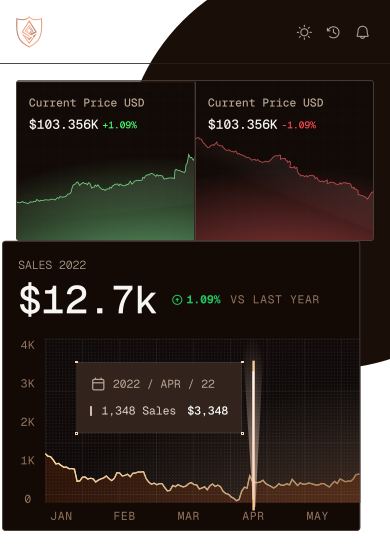
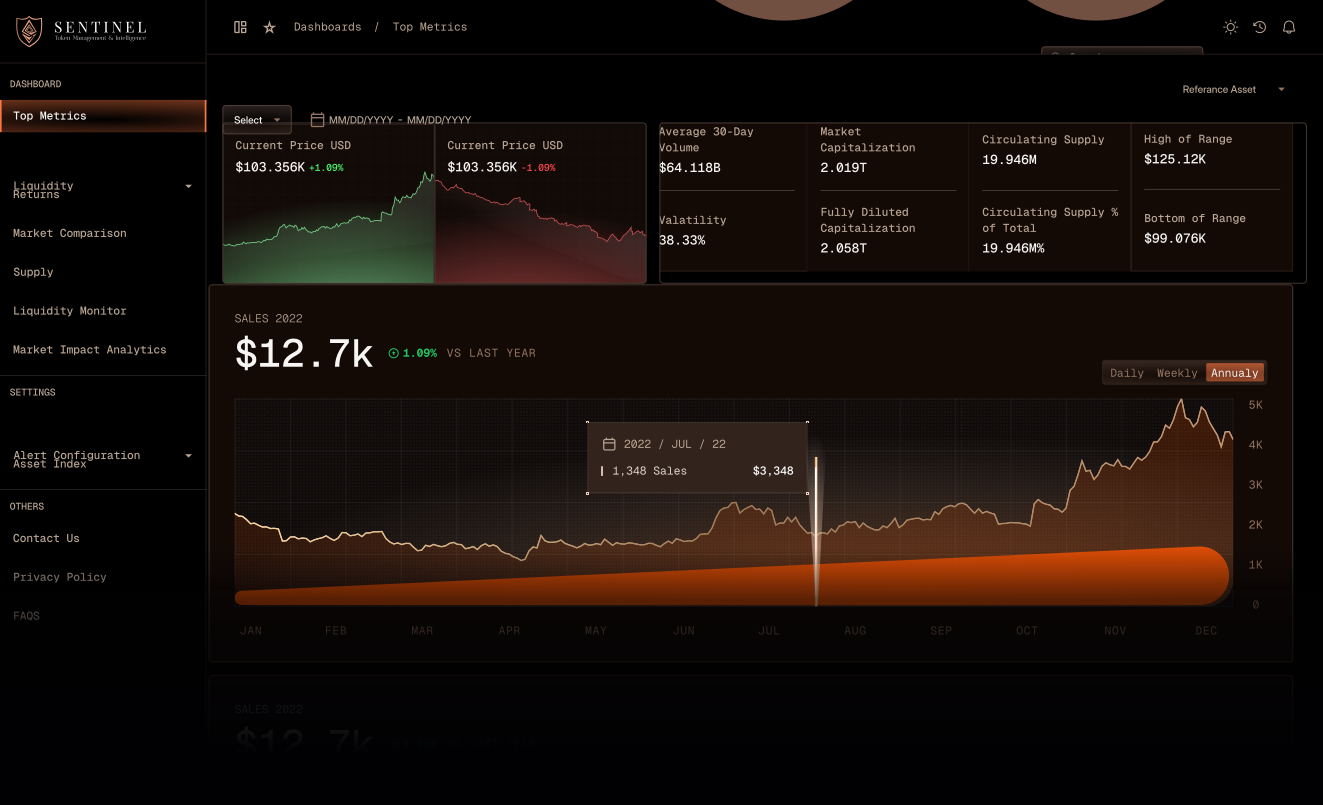
When your project has questions, we provide answers backed by evidence. A price move comes with the chart behind it, a risky deal term comes with the numbers behind the flag, and an unlock conflict comes with the calendar it was caught on.
Ask Sentinel
The questions you'll actually ask.
Every token project runs six workstreams, whether it means to or not. Market Intelligence covers each one, with the other five in view.
How should supply, unlocks, and incentives be structured?
Which cliffs or emissions release more than the market can take?
What will incentive spend do to float and sell pressure?
Ask Sentinel
The questions you'll actually ask.
Every token project runs six workstreams, whether it means to or not. Market Intelligence covers each one, with the other five in view.
How should supply, unlocks, and incentives be structured?
Which cliffs or emissions release more than the market can take?
What will incentive spend do to float and sell pressure?
One connected model
Nothing in your market moves alone.
Each workstream below is covered in full on its own: its own data, its own workflow, its own answers. Sentinel's difference is modeling them together, because that's how a market behaves: an unlock is also a depth test, a market-maker loan is also float, a listing date is also a calendar risk. The tags under each one show where its effects land.
What you issue
The schedule everything else inherits.
Cliffs, emissions, and incentive spend are modeled as what they become: sell pressure on specific dates, against specific depth. The schedule is checked against your listing calendar and what your market makers are sized for.
Where you list
A date on the calendar, a bill to the treasury.
A listing decision is priced in full: what the fee buys in genuine depth and flow, what it costs the treasury, what coverage it obliges your market makers to add, and whether the date collides with an unlock.
Who quotes you
Terms that become float and depth.
Every term is valued for what it does to the rest of the system: the loan that becomes circulating float, the option that becomes future supply, the depth commitments that become the market your token shows.
What changed
Moves read with an understanding of what you signed and scheduled.
When price, depth, or flow moves, the read lands everywhere it matters: whether the move is the market's or yours, whether your market makers held their commitments through it, and what it changes about the next sale.
Who holds it
On-chain today, on your book tomorrow.
Holder concentration, exchange inflows, and DeFi exposure are read as early supply and demand: movement on-chain becomes order flow on venues, so it's weighed against your depth before it arrives.
What funds you
Funding that trades in your own market.
Sale size, pacing, and venue mix are modeled against your own market: the depth available, the unlocks already scheduled, and the inventory your market-maker deals have committed elsewhere.
What you issue
The schedule everything else inherits.
Cliffs, emissions, and incentive spend are modeled as what they become: sell pressure on specific dates, against specific depth. The schedule is checked against your listing calendar and what your market makers are sized for.
Where you list
A date on the calendar, a bill to the treasury.
A listing decision is priced in full: what the fee buys in genuine depth and flow, what it costs the treasury, what coverage it obliges your market makers to add, and whether the date collides with an unlock.
Who quotes you
Terms that become float and depth.
Every term is valued for what it does to the rest of the system: the loan that becomes circulating float, the option that becomes future supply, the depth commitments that become the market your token shows.
What changed
Moves read with an understanding of what you signed and scheduled.
When price, depth, or flow moves, the read lands everywhere it matters: whether the move is the market's or yours, whether your market makers held their commitments through it, and what it changes about the next sale.
Who holds it
On-chain today, on your book tomorrow.
Holder concentration, exchange inflows, and DeFi exposure are read as early supply and demand: movement on-chain becomes order flow on venues, so it's weighed against your depth before it arrives.
What funds you
Funding that trades in your own market.
Sale size, pacing, and venue mix are modeled against your own market: the depth available, the unlocks already scheduled, and the inventory your market-maker deals have committed elsewhere.
Why this exists
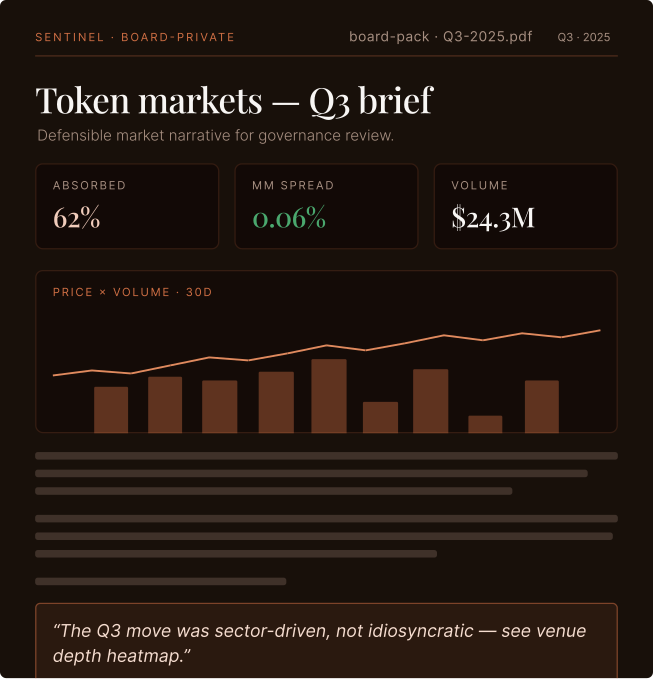
Be the most informed participant in your own market.
Platform + markets team
Market infrastructure for every issuer. Bespoke work for each project.
Markets Intelligence gives issuer teams the evidence and workflows to understand their market. Token Management adds project-specific judgment, negotiation, and execution. Use the product on its own, engage the team for bespoke work, or combine both so evidence and execution stay connected.
Markets Intelligence
One evidence layer across venues, liquidity, wallets, DeFi, counterparties, and supply, built around the decisions token issuers make.
Token Management
Project-specific markets work for decisions that change supply, liquidity, and runway. We design tokenomics, negotiate MM deals, build liquidity, and monetize treasury from the issuer’s side.